
With Dr. Rey · Pompano Beach, FL
Dental implants in Pompano Beach, planned and placed under one roof.
Dr. Reynaldo Novoa plans and places the implant. Dr. Cynthia Alfonso designs and restores the tooth on top of it. Your case is finished where it started.
What a missing tooth actually costs you
The tooth itself is rarely the whole problem. What follows it is.
You start chewing on the other side without deciding to. The teeth beside the gap begin to drift into the space, and the tooth above or below it starts to drop, because nothing is holding it in place anymore. The bone that used to support the root has no job left to do, and over the months and years it slowly gives way, which is why people who lost a tooth a decade ago often notice the change in their face before they notice it in their bite.
And then there is the part nobody puts on a treatment plan: the way you start covering your mouth in photographs, or choosing what to order by how hard it is to chew.
If you are reading this after a bridge failed, or after years with a denture that moves when you talk, you already know all of it.
Who dental implants are right for, and who they are not
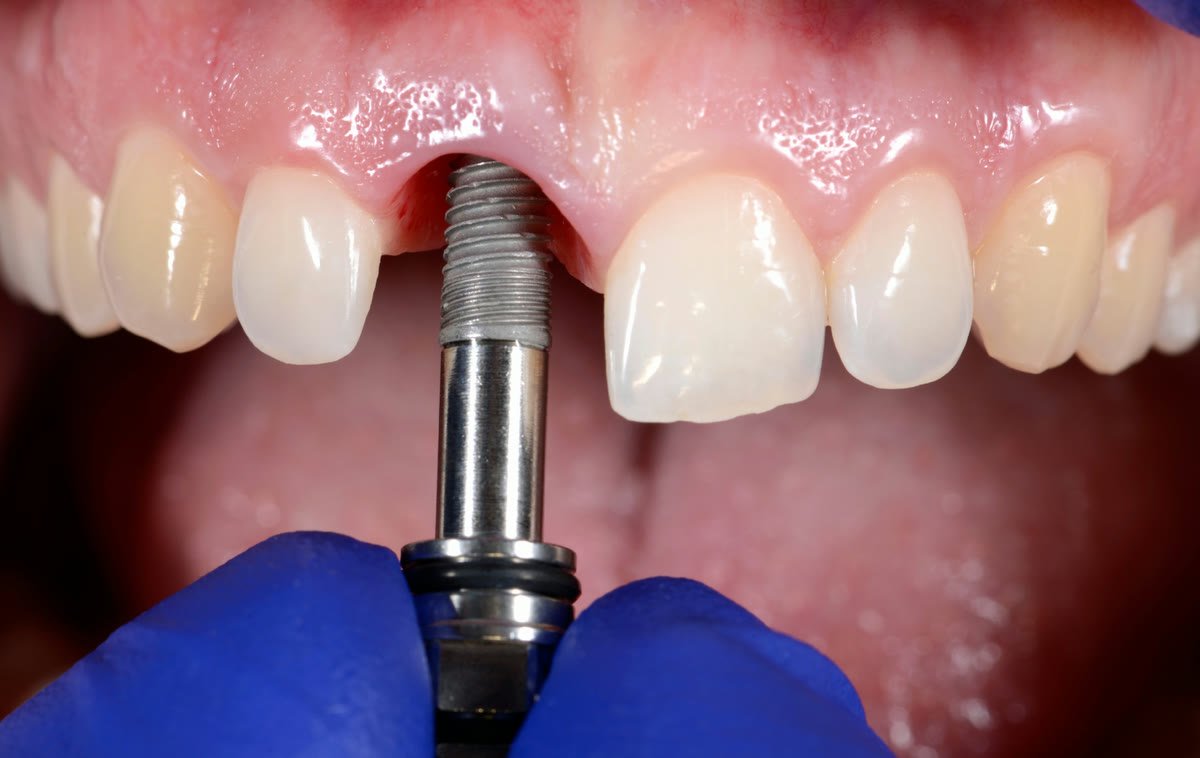
An implant is a titanium post placed in the bone in the position of the missing root. Once the bone has integrated with it, a crown designed to match your other teeth is attached on top. It replaces one tooth or several, it does not rely on grinding down the healthy teeth next to it the way a bridge does, and it is fixed in place.
There are conditions. There has to be enough bone volume to hold the implant, and when there is not, a graft comes first and adds time to the plan. Active gum disease has to be treated before anything is placed, because the same process that loosens teeth also threatens implants. Uncontrolled diabetes, smoking and some medications affect how the bone heals, and Dr. Rey will discuss yours openly with you rather than around you.
A 3D scan at the consultation answers most of this before you commit to anything. If your case needs a different solution, you will hear that too.
How it works
- 01
Consultation and 3D planning
A 3D scan shows the bone volume, the nerve position and the space available. The implant position is planned digitally before anything surgical happens, which is what keeps the final crown from being a compromise.
- 02
Preparation, when it is needed
Extraction of a failing tooth, or a bone graft where volume is missing. Not every case needs this step, and you will know at the consultation whether yours does.
- 03
Placement
Dr. Rey places the implant in our own studio, under local anesthesia. You go home the same day with clear instructions and a number to call.
- 04
Healing
The bone integrates with the implant over a few months. A temporary tooth covers the space during this period whenever the position allows it.
- 05
Your final tooth
Dr. Cynthia designs and places the crown, matching shape, translucency and shade to the teeth around it. The goal is that nobody, including you, can tell which one it is.
Surgery and restoration by the same team
In most practices these two phases belong to two different offices. The surgeon places the implant and sends you back with a healed site, and the restorative dentist designs a tooth for a position that was decided without them.
Here the position is planned with the final tooth already in mind, because the person placing it and the person restoring it work in the same studio and look at the same scan. When something needs adjusting, it gets adjusted in a conversation, not in a referral letter.
Frequently asked
Does it hurt?
Placement is done under local anesthesia and most patients describe the procedure itself as easier than they expected. Soreness in the days that follow is normal and manageable, and you leave with instructions and a direct number in case anything concerns you.
How long does the whole process take?
It depends on whether a graft is needed and how your bone heals. Simple cases are shorter, grafted cases longer. Your timeline is given to you with your plan, at the consultation, not discovered along the way.
Am I too old for implants?
Age by itself is not the limiting factor. Bone volume, gum health and general health are. Patients in their seventies and eighties are treated routinely.
Is an implant better than a bridge?
They solve the problem differently. A bridge requires reducing the healthy teeth on both sides of the gap and does nothing for the bone underneath. An implant stands on its own and loads the bone. Which one fits your case depends on the bone, the neighboring teeth and your priorities, and both will be explained to you.
I was told I do not have enough bone. Is that the end of it?
Usually not. Grafting rebuilds volume in most cases, and the 3D scan tells us how much is needed. A second opinion is worth having before accepting that implants are impossible.
Does insurance cover dental implants?
Coverage varies widely. Many PPO plans contribute to part of the treatment, particularly the restorative portion. Our financing coordinator checks your benefits before your visit and monthly payment plans are available.
Ready to talk about dental implants?
Your consultation includes a 3D scan and an exact price before anything begins.